Undersea Watercolor Sublimation Clipart Review
First Impressions: Translating Fluid Art to Thread
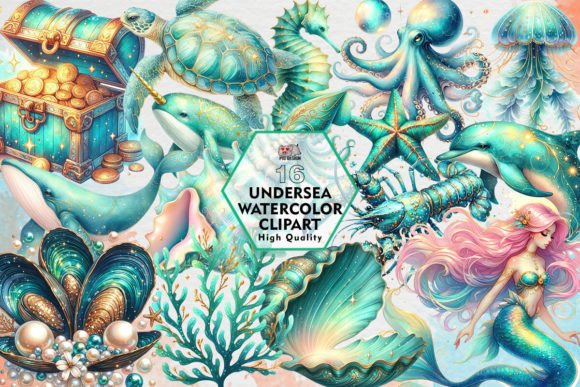
When I first opened the Undersea Watercolor Sublimation Clipart files, my immediate reaction was a mix of admiration and caution. As an embroidery designer, I have learned that what looks ethereal on a screen does not always translate seamlessly to needle and thread. These illustrations possess a dreamy, organic quality with soft gradients and fluid edges that define the watercolor aesthetic. For a digital print or sublimation project, they are stunning. However, for those of us in the craft business looking to adapt these assets for textile art, we must evaluate them through a different lens.
The visual personality of this collection is undeniably serene. It evokes movement and depth, making it ideal for themes involving marine life, ocean conservation, or summer boutique collections. Yet, as I reviewed the high-resolution images, I found myself mentally digitizing the artwork. Where would a satin stitch border be necessary to contain those bleeding edges? Which areas of color blending could be replicated with thread blending, and which would require a printed background? This clipart serves as exceptional inspiration and potential base material for mixed-media projects, but treating it strictly as a traditional machine embroidery design requires significant adaptation.
Real-World Application: The Custom Tote Bag Test
To truly understand the viability of Undersea Watercolor Sublimation Clipart for physical products, I simulated a project scenario common to many Etsy sellers and small shop owners: creating a premium canvas tote bag featuring a large-scale undersea motif. Canvas is a forgiving fabric texture, but it is also opaque and absorbent, which challenges delicate watercolor details.
In this real-life application, I determined that using the clipart solely as a digitized fill stitch pattern would result in a loss of the signature watercolor softness. Dense stitching to replicate the gradient would make the tote bag design stiff and bulletproof. Instead, the most professional approach for this specific asset is a hybrid method. I recommend using the clipart for sublimation printing on white polyester canvas or as a direct-to-film transfer, and then adding embroidery accents on top. Using a running stitch to outline the marine creatures or adding textured fill stitch elements for sea foam creates a tactile contrast that elevates the handmade product. This strategy preserves the artistic integrity of the original illustration while adding the perceived value of stitched craftsmanship that customers expect from custom apparel and boutique merchandise.
Navigating Fabric Limitations and Hoop Constraints
While the aesthetic is versatile, the technical execution of designs derived from Undersea Watercolor Sublimation Clipart demands careful consideration of your substrate. Not every fabric is a suitable canvas for this level of visual complexity.
- Textured Fabrics: Avoid using intricate interpretations of this clipart on terry cloth, fleece, or heavy linen. The fabric texture will compete with the delicate brushstroke details, causing the design to look muddy. Smooth, tightly woven fabrics or performance knits are superior choices.
- Stretchy Materials: If adapting this for baby embroidery or activewear, be wary of stitch density. Watercolor effects often tempt digitizers to use high-density fills to capture color variation. On stretchy knits, this leads to puckering and distortion. You must use appropriate stabilizer and potentially reduce detail to maintain garment wearability.
- Dark Fabrics: Watercolor relies on light passing through pigment. On black or navy garments, the design loses its luminosity unless you employ a white underbase or switch to a sublimation-plus-embroidery workflow. A standard thread-only version on dark fabric often looks flat and chalky compared to the vibrant digital file.
- Small Hoop Sizes: Resist the urge to shrink these detailed illustrations into 4x4 hoops. The fine lines and subtle shading transitions will turn into indistinguishable blobs. This art style breathes; give it space in larger hoop sizes to retain clarity.
Commercial Value and Customer Perception
For creative entrepreneurs and apparel decorators, the decision to use Undersea Watercolor Sublimation Clipart ultimately comes down to market positioning. In my experience, customers associate watercolor aesthetics with higher price points and artisanal quality. When executed correctly, finished products utilizing these assets stand out against generic, cartoonish vector art commonly found in commercial embroidery.
However, trust is built on consistency. If you sell a personalized gift or nursery decor item based on this clipart, the physical product must match the beauty of your listing photos. I strongly advise testing your interpretation in black and white mockups before launching. This reveals whether the design holds up based on value and contrast alone, without relying on color to hide structural weaknesses. Furthermore, ensure your presentation highlights the unique nature of the art. Buyers engage more deeply when they understand that the soft, painterly look is a deliberate artistic choice rather than a printing error or digitizing flaw. This distinction is vital for brand consistency and justifying premium pricing in a saturated handmade market.
Essential Designer Notes Before You Stitch
Before incorporating Undersea Watercolor Sublimation Clipart into your production line or personal studio work, please adhere to these practical guidelines to ensure success:
- Verify Licensing Terms: Confirm specifically whether the license allows for commercial embroidery, sublimation, or both. Some illustration licenses restrict usage to digital prints only. Always check the terms before selling any finished product or digital embroidery file derived from this art.
- Test on Scrap Fabric First: Never run a new adaptation directly on a client’s garment. Stitch out your test on the exact fabric and stabilizer combination you intend to use for the final project. Check for registration issues between printed backgrounds and stitched outlines.
- Evaluate Thread Color Contrast: Watercolor palettes can be low-contrast. Ensure your thread colors provide enough definition so the design reads clearly from a distance. You may need to deepen shadows or brighten highlights in your digitizing software to compensate for thread sheen.
- Inspect Small Details: If the clipart includes tiny bubbles or thin seaweed strands, verify they are wide enough to accommodate a satin stitch or triple run stitch. Anything thinner than 1mm risks breaking needles or fraying during washing.
- Check File Compatibility: Since this is primarily clipart, ensure you have the correct software to convert or integrate it into your embroidery workflow. Do not assume a pre-digitized version exists unless explicitly stated.
- Wash Testing: For items like kitchen towels or baby clothes that require frequent laundering, perform a wash test. Sublimation inks and certain thread types react differently to heat and detergent. Ensure your finished product maintains its vibrancy and structural integrity after multiple cycles.
By approaching Undersea Watercolor Sublimation Clipart with technical respect and artistic sensitivity, you can transform beautiful digital illustrations into tangible, high-value embroidered goods. The key lies in understanding where the medium of thread enhances the art, and where alternative decoration methods might better serve the original vision. Happy stitching and creating.