Watercolor Whiskey Cocktails PNG Clipart Illustrations
First Impressions: Evaluating Mood and Artistic Integrity
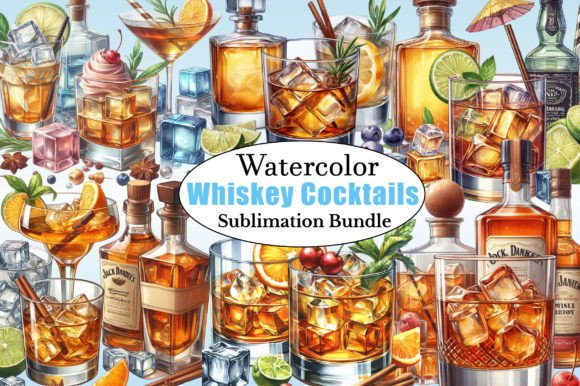
When assessing a new graphic design asset for an upcoming rebrand of "The Gilded Dram," a boutique speakeasy and event space, my primary concern is always authenticity. Clients in the hospitality and artisanal beverage sectors demand visuals that feel handcrafted rather than manufactured. Upon reviewing the Watercolor Whiskey Cocktails PNG Clipart collection, the immediate impression is one of sophisticated warmth. These illustrations avoid the overly saturated, cartoonish aesthetic that plagues many stock assets in this niche. Instead, they utilize a muted, amber-heavy palette with soft edge bleeds that mimic traditional wet-on-wet watercolor techniques.
For a designer, this specific visual texture signals versatility. The brushwork suggests movement and liquid dynamics without becoming messy, which is crucial when integrating these elements into a cohesive brand identity. The artistic style strikes a balance between vintage nostalgia and modern design sensibilities, making it suitable for clients who want to evoke tradition without appearing dated. As a digital product, the resolution appears sufficient for both screen and print, but the true test lies in how these assets perform under the pressure of real-world application across various touchpoints.
Application in Brand Identity and Packaging Design
In the context of The Gilded Dram project, the most critical application for this clipart is packaging and environmental signage. When designing product labels or menu boards, the transparency of the PNG files becomes the deciding factor. I tested these assets against dark charcoal and cream backgrounds to simulate bottle labels and chalkboard menus. The edges blend seamlessly, avoiding the dreaded white halo effect that often ruins commercial design projects. This clean extraction makes them ideal for layering behind serif typography or weaving through script fonts to create depth.
However, designers must be strategic about placement. In packaging design, these whiskey cocktail illustrations work best as secondary supporting elements rather than primary logos. They provide atmospheric context that enhances the main wordmark. For a handmade business or small batch distillery, using these as background textures on box sleeves or thank-you cards adds significant perceived value. The organic nature of the watercolor medium communicates craftsmanship, reinforcing the premium pricing strategy often required for artisanal spirits. Just ensure the color profile is converted to CMYK before sending to press, as watercolor gradients can sometimes shift unexpectedly during the printing process.
Social Media Graphics and Digital Marketing Visuals
Digital campaigns require speed and consistency. When building a Canva template library for this client’s social media manager, these assets proved exceptionally useful for Instagram stories and Pinterest pins. The loose, painterly style creates an instant focal point without overwhelming the text overlay needed for event announcements or happy hour specials. Unlike rigid vector art, the soft edges of these marketing visuals allow for easier cropping and masking within mobile-first layouts.
For content creators and bloggers covering mixology, these illustrations serve as excellent hero graphics. They break up long-form text in editorial layouts and add visual interest to recipe cards. However, maintain strict visual hierarchy. Because watercolor is inherently detailed, placing these images directly behind body copy reduces readability. Use them as headers, footers, or sidebars. In digital ads, ensure there is sufficient negative space around the cocktail glass to prevent the composition from feeling cluttered on smaller mobile screens.
Considerations for Print-on-Demand and Cricut Projects
Makers and sellers on platforms like Etsy often look for versatile design bundles that can span multiple product types. For print-on-demand sellers creating t-shirt designs or tote bags, the scale of these PNG files matters immensely. While they are high-resolution, watercolor details can be lost if scaled down too aggressively on dark fabrics. Direct-to-garment (DTG) printing handles these gradients well, but screen printing may require halftone conversion to preserve the artistic nuance.
For Cricut project enthusiasts focusing on sticker design or paper crafts, verify the contrast levels. Intricate watercolor washes can sometimes appear muddy when printed at home on standard matte paper. Test prints are non-negotiable here. Additionally, while this is primarily a PNG design asset, users requiring SVG formats for vinyl cutting should note that raster-to-vector conversion of watercolor is rarely perfect. These assets shine brightest in sublimation design and printable wall art where the full spectrum of color and texture can be appreciated without the limitations of cut lines.
Where to Exercise Caution in Professional Layouts
Despite their beauty, these illustrations are not universally applicable. I would advise against using them in minimalist corporate branding or tech-focused web design, where the organic imperfection might clash with clean grid systems. Furthermore, avoid using these assets at very small sizes, such as favicons or tiny footer icons. The delicate brush strokes will disappear, leaving unrecognizable blobs of color.
Readability is another constraint. Never place critical legal text or allergen warnings directly over the darker, more saturated areas of the whiskey liquid. The lack of uniform opacity in watercolor makes consistent text contrast nearly impossible to guarantee. Always use a solid backing shape or keep text in the negative space surrounding the glass. For projects requiring absolute precision and scalability, such as large-format billboards or vehicle wraps, consider commissioning custom vector work instead, as raster illustrations have finite resolution limits.
Technical Due Diligence and Licensing Verification
Before finalizing any creative design purchase, professional due diligence is required. First, inspect the file metadata and transparency channels. Open the PNGs in Photoshop or Affinity Photo to check for stray pixels or incomplete erasures around the glass rims. A dirty mask looks unprofessional in client deliverables. Second, test the assets in grayscale. If the illustration relies entirely on color to define form, it may fail in single-color print applications or accessibility modes.
Most importantly, scrutinize the commercial license. For a client project like The Gilded Dram, standard personal licenses are insufficient. Verify that the terms explicitly cover branding, merchandise for resale, and digital advertising. Some creative marketplace sellers restrict the number of end products or require attribution. Confirming these legal parameters protects both the designer and the client from future liability. Finally, compare the asset style against existing brand elements. Does the watercolor texture complement the chosen typeface? Does the color temperature match the photography direction? Cohesion is what separates amateur collages from professional small business branding.
Final Verdict for Commercial Use
The Watercolor Whiskey Cocktails PNG Clipart collection represents a strong contender for hospitality branding, seasonal marketing campaigns, and artisanal product lines. Its strength lies in its emotional resonance and textural quality, offering a tangible alternative to sterile vector graphics. For designers working with bars, restaurants, wedding planners, or lifestyle brands, this asset provides a shortcut to achieving a bespoke, hand-painted aesthetic.
However, success depends entirely on respectful implementation. Treat these assets as delicate ingredients in a larger recipe, not the entire meal. By adhering to best practices regarding contrast, scale, and licensing, designers can leverage these illustrations to elevate client projects from functional to memorable. Whether used for a rustic wedding invitation suite or a sophisticated bourbon label, this design asset delivers on its promise of artisanal charm, provided it is handled with the technical precision that professional work demands.