Anime Kawaii Girl Watercolor Clipart Illustrations
First Impressions for Digital Product Sellers
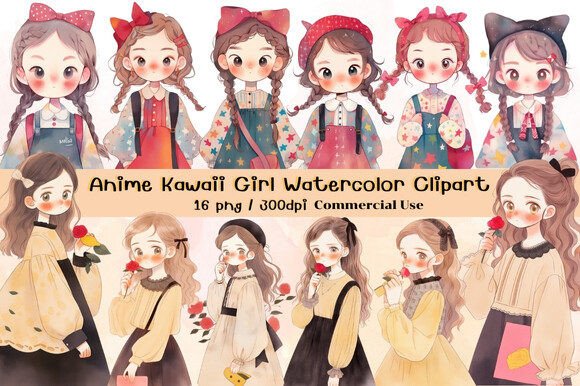
When evaluating a new graphic design asset for my shop, I look beyond the initial aesthetic appeal and focus immediately on commercial viability. My first impression of this Anime Kawaii Girl Watercolor Clipart collection is that it strikes a specific balance between nostalgic charm and modern digital usability. The mood is undeniably soft and feminine, leaning heavily into the "cozy cute" aesthetic that currently dominates specific niches on Etsy and Creative Fabrica. Unlike generic vector art, the watercolor texture adds a layer of perceived value, making these illustrations feel handmade rather than mass-produced.
For a seller targeting the stationery, planner, or nursery decor markets, this visual personality is a strong hook. It attracts buyers looking for warmth and whimsy. However, as a business-minded creator, I note that this style requires careful handling. The soft edges inherent in watercolor mean this is not a bold, high-contrast graphic. It appeals to an audience seeking elegance and gentleness, which dictates how I would position it in a creative marketplace. It feels premium enough for paid bundles but playful enough for entry-level digital downloads.
Testing Viability Across Printable and POD Products
Before listing any digital product, I run a series of practical tests to ensure the asset performs across multiple revenue streams. With this Anime Kawaii Girl Watercolor Clipart, my primary testing ground is printable stationery. I imported the files into Canva to create greeting card templates and planner sticker sheets. The transparency of the PNG designs held up well against cream and pastel backgrounds, though I had to adjust opacity slightly for darker paper stocks to prevent muddiness.
For print-on-demand sellers, this asset shows promise for niche merchandise. I tested the clipart on t-shirt designs and mug designs using realistic mockups. The watercolor texture translates beautifully to fabric and ceramic surfaces because the slight imperfections mimic actual hand-painting. However, for tumbler wraps and tote bag prints, scale is critical. I found that enlarging the artwork beyond 300 DPI at full size resulted in some pixelation at the edges. This confirms that while excellent for standard apparel and stationery, users must verify resolution before committing to large-format sublimation design projects.
I also evaluated the potential for Cricut projects. Here, caution is necessary. Watercolor illustrations often have soft, fading edges that confuse cutting machines. While these are stunning as printable stickers or iron-on transfers where the background remains, they are risky for standalone vinyl cuts unless you add a solid offset border. For crafters wanting clean cut lines, this asset works best as a layered element within a larger composition rather than a solitary die-cut shape.
Leveraging Visual Hierarchy for Listing Thumbnails
In the crowded space of online selling, your thumbnail determines your click-through rate. This Anime Kawaii Girl Watercolor Clipart excels in product presentation because of its distinct color palette. When creating listing images, I use these illustrations to establish immediate visual hierarchy. The soft pinks, blues, and lavenders naturally draw the eye without competing with bold typography. This makes them ideal for showcasing bundle contents or demonstrating usage scenarios in social media graphics.
However, there is a risk of low contrast. On a white marketplace background, pale watercolor elements can disappear. My recommendation is to place these assets on textured or colored backdrops in your mockup previews. Use a subtle paper texture or a complementary pastel solid to make the clipart pop. This small adjustment significantly increases perceived value and helps customers visualize the final result. For brand identity consistency, pairing these illustrations with a delicate serif font or a clean handwritten script reinforces the cohesive aesthetic that buyers expect from a professional design bundle.
Optimizing File Organization and Customer Experience
A beautiful asset fails if the user experience is poor. When preparing this clipart for sale or personal commercial use, file organization is paramount. Buyers in the handmade business sector appreciate clarity. I always separate high-resolution PNG designs from any editable source files. If offering a commercial license, clearly label folders to indicate which assets are for personal versus commercial design use. This reduces customer support inquiries and builds trust.
Furthermore, consider the versatility of the pack. Does it include isolated elements and pre-made compositions? For Canva template sellers, having individual floral accents separate from the main character allows for greater customization. I recommend testing how these individual pieces interact with text overlays. If the watercolor bleeds too much into negative space, it may hinder readability in invitation templates or blog graphics. Ensuring adequate whitespace around the subject matter is essential for functional utility.
Strategic Placement: Where This Asset Shines and Struggles
Understanding the strengths and limitations of a graphic design asset prevents returns and negative reviews. This Anime Kawaii Girl Watercolor Clipart performs exceptionally well in decorative layouts, nursery wall art, and seasonal bundles like Valentine’s Day or Spring collections. Its inherent softness supports emotional connection, making it perfect for baby shower invitations, self-care journal covers, and romantic packaging design.
Conversely, use this asset carefully in technical applications. Avoid using it for tiny sticker details where intricate watercolor textures will blur into indistinct blobs upon printing. It is also ill-suited for dark mode digital interfaces or high-contrast warning labels where legibility is safety-critical. In crowded thumbnails with heavy text overlays, the detailed brushwork can become visual noise. Always prioritize clarity over decoration when the primary goal is information transmission rather than aesthetic appreciation.
Essential Pre-Launch Checklist for Sellers
To maximize ROI and minimize risk, follow this practical checklist before publishing products featuring this clipart:
- Verify Licensing: Confirm the specific terms of the commercial license. Some allow end-products but prohibit reselling the raw digital download or using it in print-on-demand platforms without significant modification.
- Test Print Colors: Screen colors differ from CMYK output. Print a physical sample to ensure the watercolor gradients do not band or shift unexpectedly on your chosen paper or substrate.
- Check Transparency: Inspect PNG edges for white halos or jagged artifacts. Clean edges are non-negotiable for professional sticker design and overlay usage.
- Mockup Realism: Do not rely solely on flat digital previews. Show the art on a real t-shirt, mug, or paper sheet to demonstrate scale and texture accurately.
- Font Pairing: Test at least three typeface styles. A bold sans-serif might clash with the delicate art, while a flowing display font could enhance the kawaii aesthetic.
- Resolution Audit: Ensure all files meet the minimum 300 DPI standard at their intended print size to avoid customer complaints about blurry prints.
Final Verdict for Creative Entrepreneurs
Ultimately, this Anime Kawaii Girl Watercolor Clipart represents a solid investment for sellers in the stationery, POD, and digital planning niches. Its strength lies in its emotional resonance and versatile texture, which elevates simple products into desirable keepsakes. By approaching this asset with a critical, business-first mindset—testing its technical limits, optimizing its presentation, and respecting its stylistic boundaries—you can transform a pretty illustration into a profitable component of your small business branding strategy. Success in digital selling comes not just from finding cute art, but from understanding exactly how that art functions within the broader ecosystem of commercial design and customer expectation.